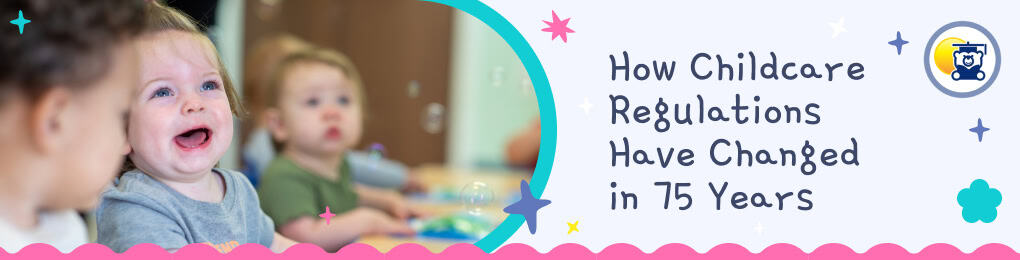
Imagine taking your child to their first day at an early learning center. You walk into a home or church basement. There are no emergency exits or other safety precautions, and the teachers are everyday people without certifications in childcare. You wouldn’t leave your child there, right? Believe it or not, this was what the average childcare center looked like in the early 1960s. Childcare regulations have clearly changed in the past 75 years.
As an early learning center that first opened in 1964, we have seen firsthand how childcare regulations have evolved and ensure parents of young children know these rules are followed. After all, these changes are all aimed at helping children thrive. In this article, we’ll cover:
- How childcare regulations evolved over the last 75 years
- Why these changes matter for children and families
- What still needs to improve in the childcare system today
The best way to ensure your child is getting the highest-quality care in their early learning center is by staying up to date on the latest childcare regulations and practices. Let’s dive into what these are and how they have changed since the 1950s.
What Childcare Looked Like 75 Years Ago
Today, parents expect their child’s early learning center to follow strict rules about safety, staffing, and education. This was not always the case. Our founder Geraldine “Mrs. D” Dolinar saw this firsthand when she tried to find a safe place for her daughter to play and learn. The truth is, before modern childcare regulations, many programs focused simply on watching children while parents worked. Formal training for caregivers was not common, and consistent safety standards did not exist across states.
Historically, childcare programs were often created to support families facing economic hardship or working long hours. Early “day nurseries” in the United States were often charitable services designed to help working mothers rather than educational programs for children. And education during a child’s early years was rarely a focus. But that began to change in the mid-twentieth century.
How World War II Changed Childcare in America
One of the biggest turning points in childcare history happened during World War II. During the war, millions of women entered the workforce to support the national war effort. Families suddenly needed reliable childcare. To solve this problem, the federal government created the first national childcare program through the Lanham Act. This program funded childcare centers for the children of working parents in defense industries. These childcare centers included educational activities, healthy meals, extended hours for working parents, and structured daily schedules. For the first time, the United States recognized childcare as essential support for families. When the war ended, most of those childcare centers closed. But the idea that childcare mattered for children and families had taken root.
The Birth of Modern Preschool Programs
In the 1960s, new research about child development began changing how people thought about early education. Scientists discovered that the first five years of life are critical for brain development. Children build language skills, emotional awareness, and problem-solving abilities during these early years. This research helped inspire one of the most important childcare programs in U.S. history: the Head Start program.
The Head Start program was designed to support children before kindergarten by providing education, health services, and family support. It showed that early learning programs could help children build strong foundations for school. It also helped push states to create better standards for preschool programs and childcare providers. Early childhood education was finally being taken seriously, which in turn led to more rules on how to best protect, educate, and care for children in early learning centers.
Evolving Rules and Standards in Early Learning Centers
As the importance of early childhood education became more recognized, states began developing stronger childcare regulations to keep children safe and improve the quality of care they received. These regulations help ensure that every early learning center provides a safe and supportive place for children to grow. Today, licensed childcare programs must follow several important standards:
Teacher to Child Ratios
One of the most important childcare regulations early learning centers must follow is the teacher-to-child ratio. This rule limits how many children one teacher can supervise at a time. Younger children require more attention and care, so the ratios are smaller for infants and toddlers. According to the Kansas legislature, childcare centers need to adhere to the following ratios based on the children’s ages:
- 6 weeks to 11 months: 1 adult for every 3 infants
- 18 months: 1:5
- 35 months: 1:7
- 3 to 4 years: 1:12
- 5 years: 1:14
- 6+ years: 1:16
These ratios help ensure that every child receives enough attention, support, and supervision throughout the day.
Health and Safety Practices
Preschool programs must follow strict health and safety guidelines. These rules help protect children from illness and injury. They often include requirements for:
- Regular cleaning and sanitation of classrooms and toys
- Safe food handling and meal preparation
- Proper hand-washing routines
- Safety of outdoor playground surfaces
- Proper supervision
- Safe sleep practices for infants
By following these standards, early learning centers create environments where children can learn and play safely.
Staff Background Checks
Parents trust childcare providers with the most important people in their lives: their children. That’s why most states, including Kansas, require comprehensive background checks for anyone working in a childcare center. These background checks help ensure that teachers and staff have safe and appropriate histories before working with children. This keeps children safe and grants parents peace of mind knowing their little ones are in good hands.
Emergency Preparedness
Early learning centers must be prepared for unexpected situations so they can protect children from harm. Modern childcare regulations require preschool programs to develop emergency plans for situations such as fires, severe weather, medical emergencies, and building evacuations. All staff are trained to follow these plans, and emergency drills are regularly conducted to ensure children remain safe even during stressful situations.
Staff Training and Certifications
Today’s early childhood educators receive far more training than childcare workers did 75 years ago. Many childcare regulations require early childhood educators to complete training or education in early childhood development. These teachers also need to complete training in the following areas:
- CPR and first aid
- Safe sleep practices
- Classroom management
- Recognizing signs of illness or injury
- Continuing education
Ongoing training helps early childhood educators stay up to date on best practices and continue improving the quality of care they provide.
Safe Learning Environments
Nowadays, it is very unlikely that an early learning center could be run out of someone’s basement. It simply wouldn’t be able to meet the physical safety requirements such as:
- Childproofed classrooms
- Safe playground equipment
- Secure entrances and exits
- Regular facility inspections
These standards ensure that children can explore and play in spaces designed with their safety in mind.
All these regulations work together to create the high-quality early learning centers families expect today. They also reflect something even more important: society now recognizes that childcare is not just supervision. It is an essential part of early childhood development.
There’s Always Room for Improvement in Childcare
While childcare has improved significantly over the past 75 years, the future of early learning centers will depend on continued progress. Supporting the childcare system is not just important for families today, but for the families of tomorrow. That’s why the following improvements must be made:
Stronger Support for Early Childhood Educators
Early childhood educators play a vital role in helping children learn, grow, and build confidence. Yet many of these educators earn far less than teachers in other parts of the education system. When teachers receive better support and fair compensation, it helps the entire education system. Preschool programs can then retain experienced teachers, children benefit from consistent relationships with their educators, and classrooms become more stable. This creates effective learning environments where children can truly thrive.
Expanded Access to Preschool Programs
Many families would benefit from access to high-quality preschool programs, but not every community has enough childcare providers. Expanding access to early learning programs helps ensure that more children can benefit from early education during the years when their brains are developing most rapidly. Research consistently shows that children who participate in strong early learning programs are more prepared for kindergarten and future school success.
Increased Investment in Early Learning
Early childhood education provides long-term benefits for both children and communities. When communities invest in early learning centers, they help support:
- Child development
- School readiness
- Working families
- Stronger local economies
These investments allow programs to maintain safe environments, hire skilled educators, and provide enriching learning experiences for children.
Continued Research on Child Development
Our understanding of child development continues to grow. Researchers are constantly learning more about how children develop language, social skills, emotional awareness, and problem-solving abilities during their early years. As this research continues, it helps educators improve teaching methods and refine preschool programs to better support children’s development. The more we learn about how children grow, the better we can design environments that help them thrive.
Stay Connected with Our Early Learning Community
From our founding in 1957, Kiddi Kollege has strived to deliver the highest level of care and education to young children. And as childcare regulations have evolved, we have kept up with the changing times and continue to learn new ways to help children thrive. Sign up for our newsletter to get monthly updates on our early learning centers and tips on how to support your child’s development.
Early Learning Center FAQs
Childcare regulations help protect children. They set rules for safety, supervision, staff training, and learning environments so children receive quality care.
Early childcare standards began appearing in the early 1900s, but modern regulations expanded significantly in the mid twentieth century as early childhood education gained recognition.
Requirements vary by state, but many educators receive training in child development, classroom management, and early education practices.
Daycare traditionally focuses on supervision, while a preschool program includes structured learning activities that help prepare children for kindergarten.
Regulations require background checks, safe facilities, proper supervision, emergency procedures, and trained staff.
No. Each state sets its own childcare regulations, although many share similar safety and training standards.
Research shows that early childhood is a critical time for brain development, language growth, and social skills.
Parents should look for:
- Licensed programs
- Trained teachers
- Safe environments
- Engaging learning activities
- Positive relationships between teachers and children
Preschool programs help children develop language skills, social skills, and early academic abilities that prepare them for kindergarten.
Childcare programs now include stronger regulations, trained educators, development-focused learning, and safer environments for children.
Enjoy content from Kiddi Kollege? Make us one of your preferred sources on Google.